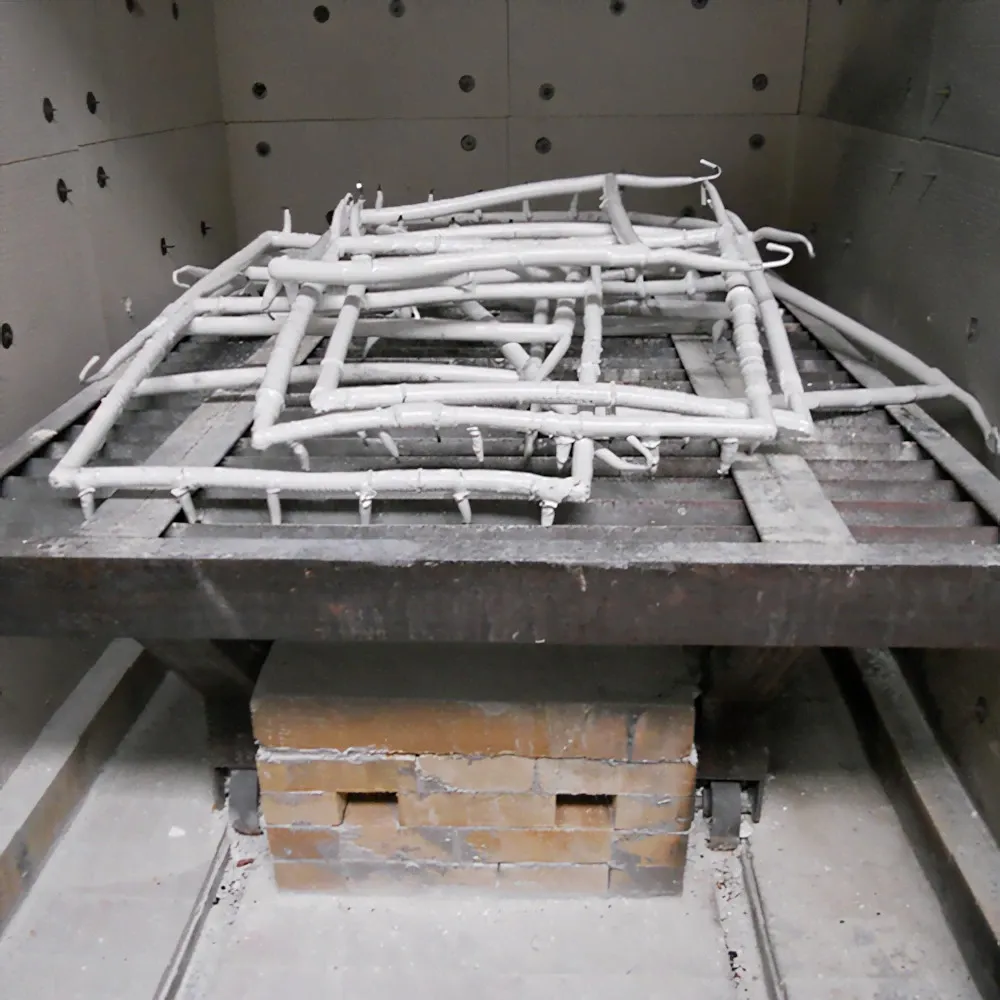
Hook cleaning furnaces safely clean paint from metal using pyrolysis method.
Hook cleaning furnaces thermally decompose paint on metal through a process called pyrolysis in an oxygen-deficient atmospheric environment. Pyrolysis is a destructive cleaning process of solid organic material in an airless environment with high heat.
Our hook cleaning furnace does not burn or ignite anything belonging to the parts or equipment placed for cleaning.
During operation, the hook cleaning furnace decomposes paint, sedimented oil, accumulated grease, and polymer through an endothermic reaction, leaving very little ash. The resulting gas combines with high-oxygen flame in the other combustion chamber and is released as environmentally harmless gas at approximately 1,200°C.
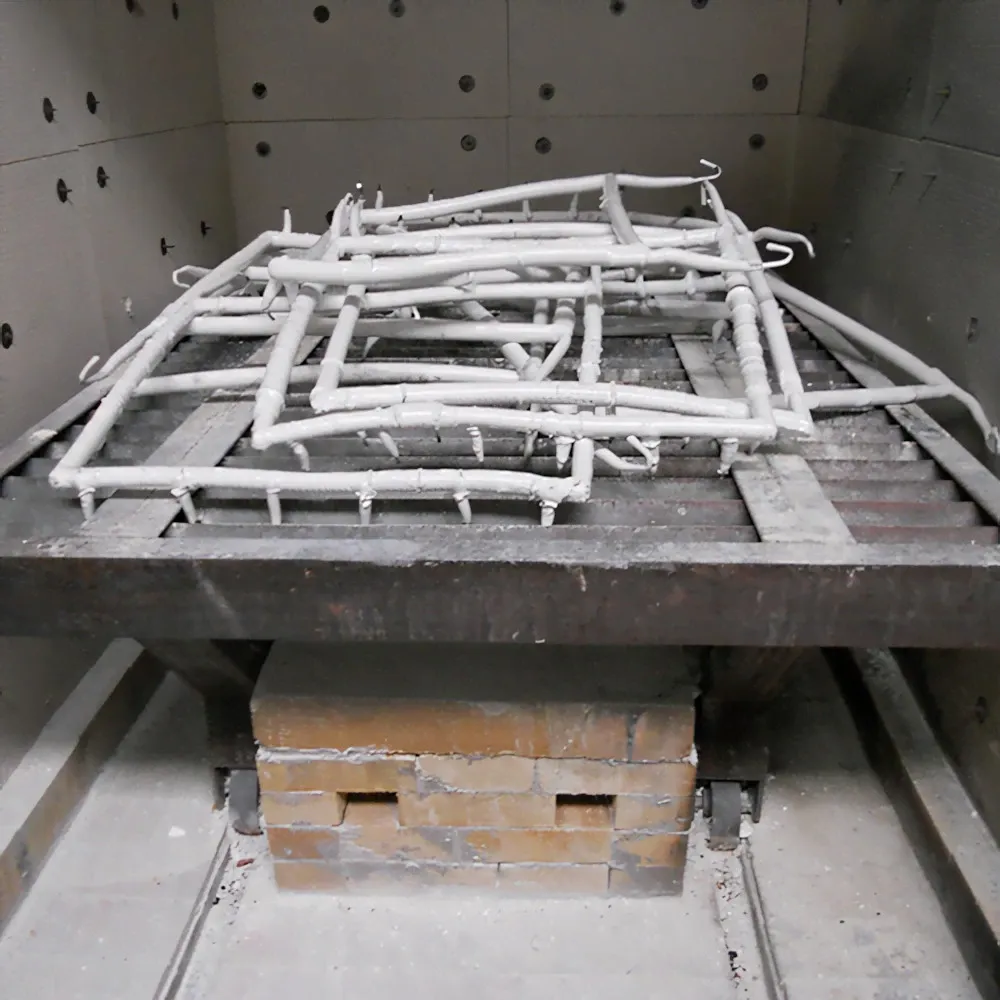
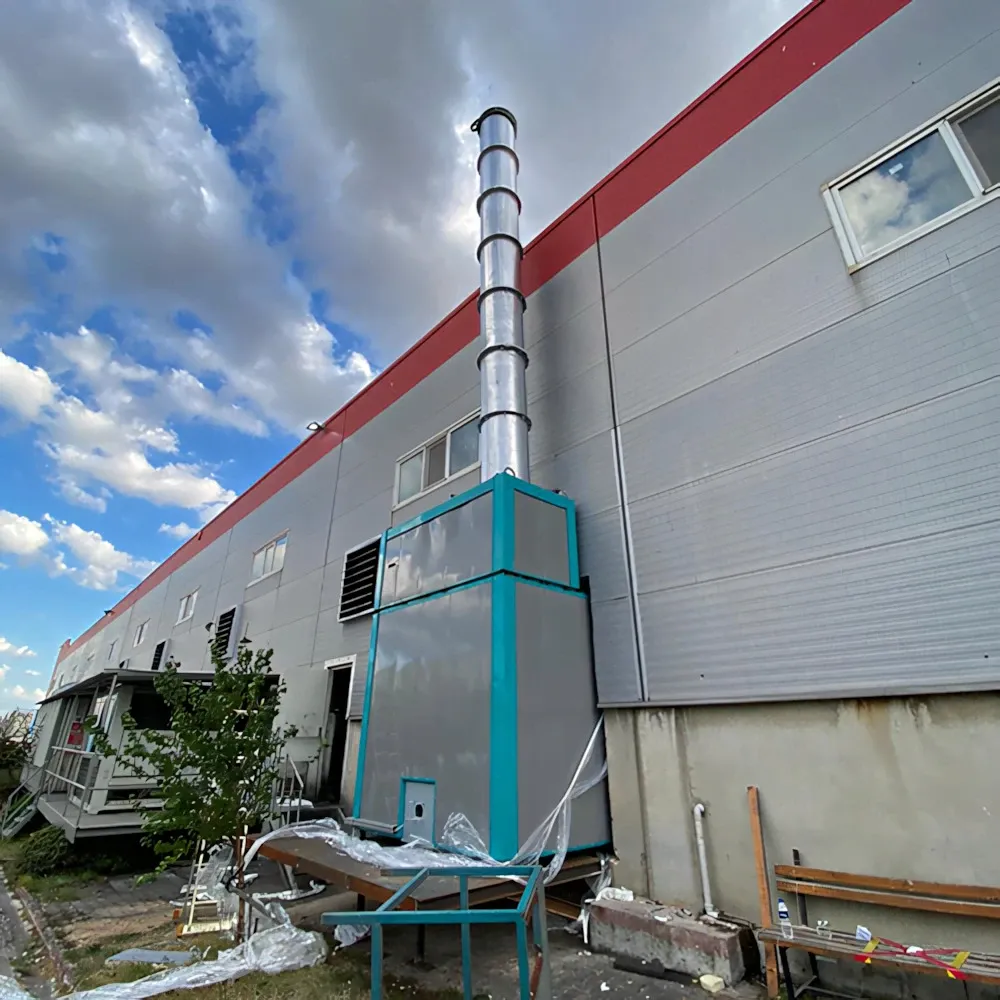
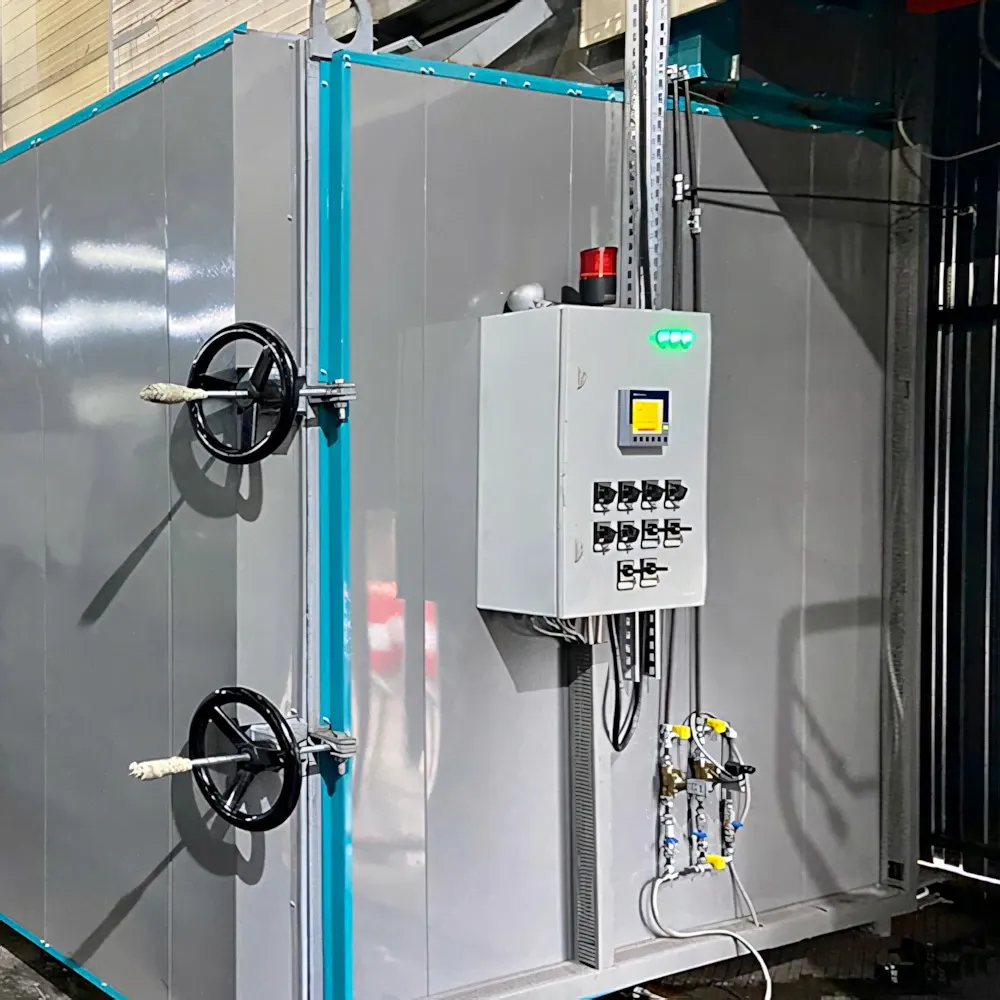
Paint stripping furnaces eliminate both the usage costs of alternative cleaning methods such as open fire pits, bare flame cleaning, hazardous chemicals, corrosive chemicals, and acids, as well as the environmental hazards that may arise from their disposal.
Controlled hook cleaning furnaces are basically process furnaces that operate at temperatures (425°C – 485°C) in the primary cleaning chamber. Our hook cleaning furnaces clean powder paint, wet paint, cataphoresis coating, grease, polish, rubber, plastic, engine blocks, extrusion molds, heat exchangers, or other metal parts.
The purpose of our hook cleaning furnaces is to remove organic material coatings on metal and return metal parts to service or renew them.
In our furnaces, the primary heat inlet burner is directed to a chamber containing flame. Thus, only high heat is delivered to the working area where the parts are located. Parts never come into contact with flame.
Materials cleaned in the hook cleaning furnace are organic compounds that do not contain elements such as lead, mercury, cadmium, chlorine, fluorine, and sulfur. If these materials are not present in the organic material, it is not possible for the furnace to produce an emission containing any of these components.
The ashes classified as waste from paint stripping are classified as non-hazardous waste with code 080118, so they can be easily used in many areas.
1 products found